
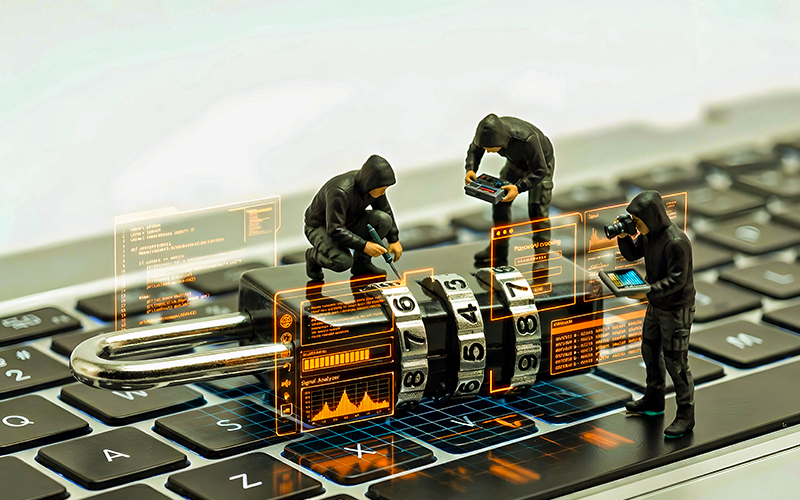
Weak Password Cybersecurity Risks remain one of the biggest threats facing businesses today. Despite growing investments in digital transformation, cloud technology, and advanced security solutions, many organisations continue to overlook one of the simplest cybersecurity fundamentals: strong passwords. A single weak password can give cybercriminals access to sensitive data, financial information, customer records, and critical business systems, resulting in costly consequences that could have been prevented.
Understanding Weak Password Cybersecurity Risks
Many businesses assume hackers rely on sophisticated tools and complex techniques to break into systems. In reality, cybercriminals often target the easiest point of entry: weak passwords.
Passwords such as:
- 123456
- password
- qwerty
- admin123
- companyname2025
are among the first combinations attackers attempt when targeting business accounts.
With automated hacking tools capable of testing thousands of password combinations every second, weak credentials can be compromised almost instantly.
Why Weak Password Cybersecurity Risks Are Increasing
As businesses adopt more digital platforms, employees are managing more accounts than ever before. This creates an environment where convenience often takes priority over security.
Common risky practices include:
- Using short passwords
- Reusing passwords across multiple accounts
- Sharing passwords among team members
- Storing passwords in unsecured documents
- Using predictable personal information
These habits significantly increase exposure to cyber threats and make businesses easier targets for attackers.
The Business Impact of Weak Password Cybersecurity Risks
The consequences of a compromised password extend far beyond a single account.
Data Breaches
Customer records, financial information, intellectual property, and confidential business documents can be stolen or exposed.
Financial Losses
Businesses may face ransomware payments, fraud, legal expenses, regulatory fines, and recovery costs.
Operational Downtime
Cyberattacks can disrupt operations, delay projects, and impact customer service delivery.
Damage to Reputation
Trust is difficult to earn and easy to lose. A security breach can cause long-term damage to customer confidence and brand reputation.
How Strong Passwords Reduce Cybersecurity Risks
One of the most effective ways to reduce cybersecurity risks is by implementing stronger password practices.
Strong passwords should:
- Be at least 12–16 characters long
- Include uppercase and lowercase letters
- Contain numbers and symbols
- Avoid personal information
- Be unique for every account
The stronger and more unique a password is, the more difficult it becomes for attackers to gain access.
Password Reuse: A Hidden Cybersecurity Risk
Many employees use the same password for multiple systems because it is easier to remember.
For example, one password might be used for:
- Email accounts
- Cloud platforms
- Customer management systems
- Banking applications
- Social media accounts
If one platform suffers a breach, attackers can use those credentials to access every other account that shares the same password.
This is one of the most common causes of successful business cyberattacks.
Multi-Factor Authentication Strengthens Password Security
While strong passwords are essential, they should not be your only line of defence.
Multi-Factor Authentication (MFA) adds an additional layer of security by requiring users to verify their identity through:
- Authentication apps
- SMS verification codes
- Security tokens
- Biometric authentication
Even if attackers obtain a password, MFA can significantly reduce the likelihood of unauthorised access.
Building a Culture That Reduces Weak Password Cybersecurity Risks
Cybersecurity is not solely the responsibility of the IT department.
Every employee plays a role in protecting business systems and data.
Businesses should regularly:
- Provide cybersecurity awareness training
- Implement password policies
- Conduct security audits
- Encourage password manager usage
- Monitor suspicious login activity
Creating a security-conscious workplace helps reduce the likelihood of human error becoming a costly vulnerability.
Password Managers: A Smart Security Investment
Remembering dozens of unique and complex passwords is difficult for most employees.
Password managers help businesses:
- Generate strong passwords
- Store credentials securely
- Reduce password reuse
- Improve overall cybersecurity practices
By removing the need to remember multiple passwords, organisations can improve both security and productivity.
Conclusion: Weak Password Cybersecurity Risks Are Preventable
Weak Password Cybersecurity Risks continue to be one of the most preventable causes of business cyberattacks. While organisations often focus on advanced security technologies, the strongest cybersecurity strategies begin with the basics.
A single weak password can expose sensitive information, disrupt operations, damage customer trust, and create significant financial losses. By implementing strong passwords, enabling multi-factor authentication, using password managers, and promoting cybersecurity awareness, businesses can dramatically reduce their exposure to cyber threats.
Because in today’s digital world, cybersecurity truly starts with the basics—and one weak password can still create one very big risk.