
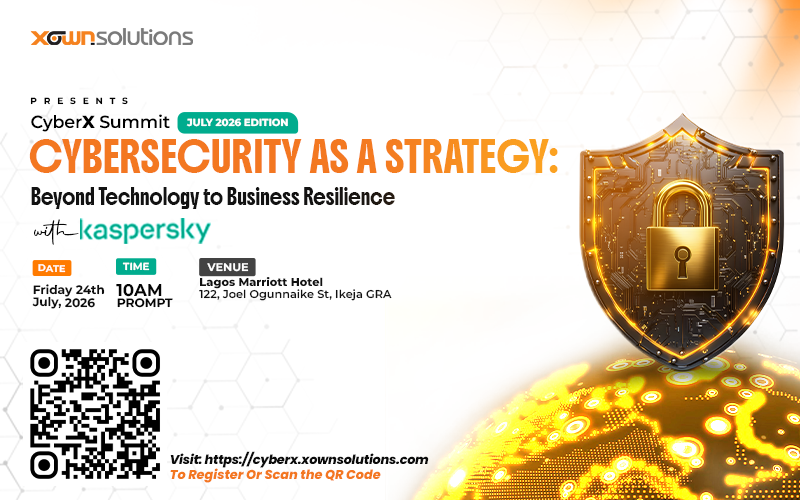
Becoming a cyber-ready business is no longer optional, yet most business owners believe they are already doing enough. They have an IT person, an antivirus subscription, and a standing reminder to staff about suspicious emails. For a while, that feels sufficient. However, when a cyberattack strikes, that comfort disappears within hours. In 2026, hoping for the best is not a strategy.
1. A cyber-ready business treats security as a strategy, not a purchase
Vulnerable businesses buy a tool and consider the job done. They install a firewall, tick the compliance box, and move on.
A cyber-ready business, however, asks a different question: “If something goes wrong tomorrow, are we actually prepared?” Rather than treating cybersecurity as a one-time expense, they approach it the way they approach financial planning: as an ongoing, evolving strategy that touches every department. It becomes a boardroom conversation, not just an IT issue.
2. Most businesses don’t know where they’re exposed
You cannot protect what you do not understand. Unfortunately, many vulnerable businesses have no clear picture of their risk; they are unsure which systems hold sensitive data, who has access to what, or where the critical gaps exist. As a result, they discover the problem only after an attacker has already.
A cyber-ready business, by contrast, conducts regular risk assessments. Leaders know their most valuable assets, their most likely threat vectors, and their weakest entry points, well before an attacker finds them first.
3. A cyber-ready business has a plan for when things go wrong
Here is what most people fundamentally misunderstand about cybersecurity: the goal is not to make your business impossible to attack. That is unrealistic. Instead, the goal is to ensure that when something happens, your business does not collapse alongside it.
Vulnerable businesses have no incident response plan. When a breach occurs, panic sets in, and panic is expensive. A cyber-ready business, on the other hand, has already worked through the hard questions:
- Who do we call first?
- Which systems do we isolate immediately?
- How do we communicate with clients and stakeholders?
- How do we recover without losing weeks of operation?
Having those answers ready before a crisis is precisely what separates a recoverable incident from a business-ending one.
4. Technology alone will not save you
Even the most sophisticated security software will not protect a business whose staff clicks on a phishing email. Vulnerable businesses assume technology will handle everything on its own. A cyber-ready business, though, recognises that people are simultaneously the biggest risk and the strongest line of defence, and trains accordingly.
Regular staff awareness sessions, clear internal security policies, and a culture where everyone takes responsibility together create a resilience that no software alone can replicate.
5. Don’t wait for a breach to start learning
There are two ways to gain cybersecurity knowledge. You can wait until something goes wrong and learn from the wreckage. Or, alternatively, you can learn from people who have already seen it all before it costs you anything.
Vulnerable businesses learn reactively. A cyber-ready business, in contrast, seeks knowledge proactively. Leaders stay close to industry conversations, follow emerging threats, and deliberately put themselves in rooms where the right experts are talking.
The gap is closeable, but only if you act
The difference between a cyber-ready business and a vulnerable one is not luck. Furthermore, it is not even about having a large budget. It comes down to access to the right information, at the right time, from the right people.
That is precisely what CyberX Summit 2026 is designed to provide.
On July 24, 2026, Xown Solutions, in partnership with Kaspersky, is bringing together business leaders, IT decision-makers, and cybersecurity experts at the Marriott Hotel, Ikeja, Lagos, for one focused day of practical, no-jargon strategy.
You will leave with a clear understanding of where your business stands, what to prioritise first, and how to build the kind of resilience that keeps you operating no matter what comes.
The question, therefore, is simple: which side of the line do you want to be on?
Register now: https://cyberx.xownsolutions.com/